


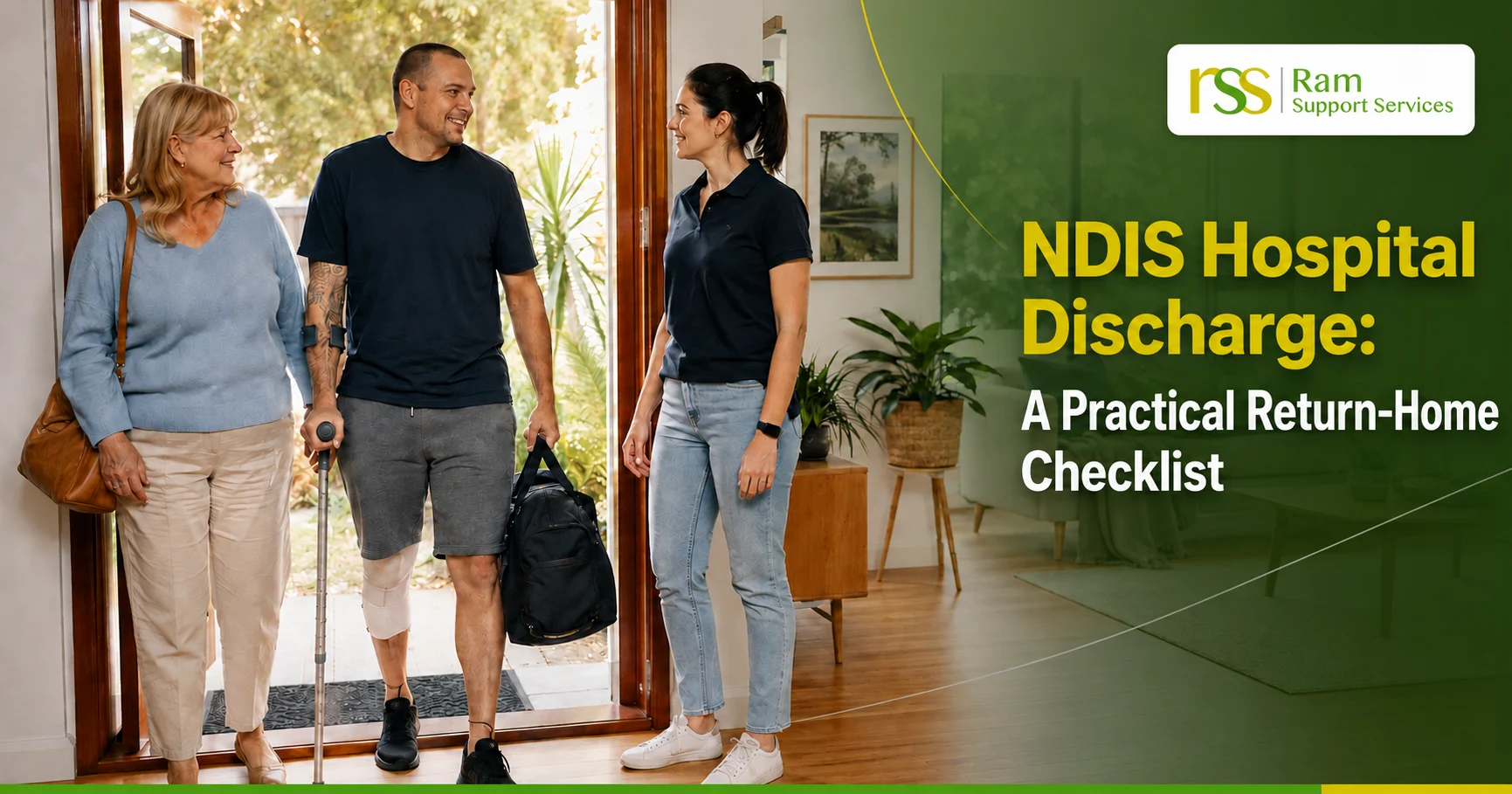
Going home after a hospital stay can bring relief, but it can also create a long list of practical questions. Will the right support worker be available? Is the home safe to return to? Are medications, equipment, nursing and follow-up appointments organised? Who should be contacted if needs have changed?
For an NDIS participant, a successful discharge depends on early communication between the participant, hospital, NDIA, support coordinator, providers, family and other members of the care team. Planning should protect the participant’s choice and control while making sure there are no avoidable gaps on the first day home.
This practical checklist can help participants, nominees, families and referrers prepare for a safer, calmer return home.
Start planning as early as possible
Do not wait until the day before discharge to begin organising disability supports. Tell hospital staff that you are an NDIS participant and give consent for the hospital and NDIA to share the information needed for discharge planning. You can also contact your my NDIS contact directly.
The NDIA’s current hospital guidance states that it will make contact within four days after being notified. A hospital liaison officer may then help explain what information is needed, whether a home and living assessment is required and whether the participant’s NDIS plan may need to change.
If you have a support coordinator, involve them early. They can work with you, the hospital and your chosen providers to identify approved supports and prepare them before you leave.
NDIS hospital discharge checklist
- Confirm the discharge plan: Ask for the expected discharge date, discharge destination and written discharge summary. Check that the summary reflects your current needs, medications, follow-up instructions and warning signs that require medical attention.
- Review changes in support needs: Identify what is different from before the hospital stay. You may need more personal care, mobility support, overnight assistance, nursing, transport, meal preparation or help attending appointments.
- Check the NDIS plan: Confirm which disability-related supports are already funded. If the current plan no longer fits the situation, speak with the my NDIS contact about the evidence and process needed to request a change.
- Choose and brief providers: Select providers yourself or with support coordination. Share only the information needed for safe support, agree on start dates and make sure workers understand routines, risks, communication needs and the discharge instructions relevant to their role.
- Prepare the home: Check access, sleeping arrangements, bathroom safety, equipment, medication storage, food and essential supplies. Any assistive technology or home modifications should be assessed and approved through the appropriate process.
- Arrange the journey home: Confirm who will collect you, whether accessible transport is required and how mobility aids, belongings and medication will travel with you. Build in enough time so the trip is not rushed.
- Schedule the first follow-ups: Record appointments, pathology, wound reviews, therapy, GP or specialist visits. Confirm who will assist with booking, transport, reminders and information sharing.
- Create a first-72-hours plan: Write down the support roster, medication arrangements, meals, equipment checks, clinical contacts and backup numbers for the first three days. Make sure the participant and key supporters can access it.
Supports that may be part of the transition
The right support mix depends on the participant’s disability-related needs and approved NDIS funding. It may include several services working together rather than one provider doing everything.
- Hospital discharge support – to coordinate the move home and close practical gaps
- In-home care – for personal care, meals, household tasks and everyday routines
- Community nursing – for disability-related nursing tasks such as wound care, medication support and health monitoring where funded
- Complex care – for high-intensity daily supports delivered by appropriately trained workers
- NDIS transport – for approved disability-related travel support
- Support coordination – to connect providers, organise supports and help implement the plan
| Remember the boundary between health and disability supports
The hospital and wider health system remain responsible for diagnosis, acute treatment and health services that are not NDIS supports. The NDIS may fund approved disability-related supports that help a participant live safely and pursue their goals after discharge. Ask the hospital, my NDIS contact and support coordinator to clarify responsibilities rather than assuming every post-discharge need is funded by the NDIS. |
Questions to take into the discharge meeting
- What must be ready before I am considered safe to leave hospital?
- What has changed in my daily support or home and living needs?
- Has the NDIA been notified, and who is my hospital liaison contact?
- Does my current NDIS plan cover the supports I now require?
- Which services are the hospital’s responsibility, and which may be NDIS supports?
- Who will organise equipment, medications, transport and the first support shift?
- What is the backup plan if a worker, item of equipment or transport is unavailable?
- Who should I contact if my condition or support needs change after I return home?
The first week at home
A plan that looked right on paper may need adjustment once daily life resumes. Arrange check-ins with the participant and the people delivering support. Confirm that workers are arriving as agreed, equipment is functioning, instructions are understood, and the participant feels safe and heard.
Changes should be documented and shared with the appropriate people, with the participant’s consent. Urgent health concerns should be directed to the relevant clinician or emergency service. Non-urgent gaps in disability support can be raised with the NDIS registered provider, support coordinator or my NDIS contact, depending on the issue.
How Ram Support Services can support the return home
Ram Support Services provides person-centred support across Hobart, Melbourne, Adelaide and Perth. The team can work with participants, families, hospitals and support coordinators to prepare practical supports for discharge and provide continuity once the participant is home.
Support is shaped around the participant’s goals, routines and approved plan. That may mean coordinating the first journey home, arranging personal support, introducing community nursing or complex care, and adjusting the service as recovery progresses.
If you or someone you support is preparing to leave hospital, call Ram Support Services on 0450 341 737 as early as possible. A timely conversation can help identify what needs to be ready before discharge day.